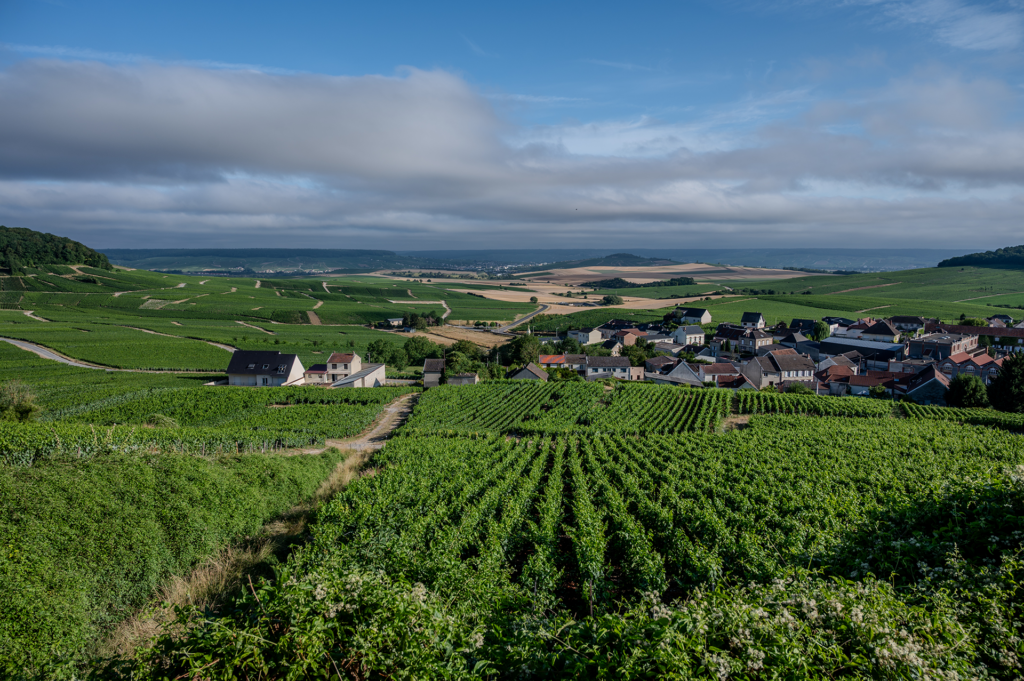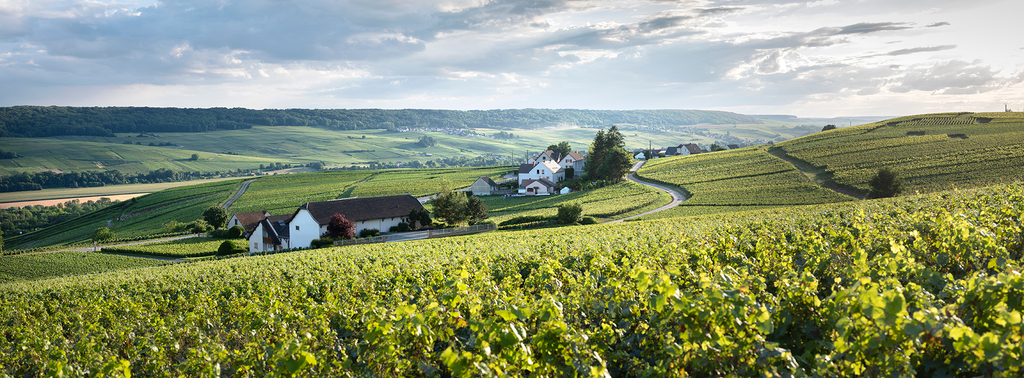
The Côte des Bar is one of the four major regions of the Champagne vineyards. Yet it sometimes remains less familiar to visitors exploring Champagne from Reims. Located in the Aube department, south-east of Troyes, it features landscapes and soils that differ from those of the vineyards around Reims or Épernay. This distinctive character gives rise to champagnes with a truly individual personality.
Where is the Côte des Bar located?
The Côte des Bar forms the southernmost part of the Champagne appellation area. Its name derives in particular from two historic areas: Bar-sur-Seine and Bar-sur-Aube. The landscape is characterised by a succession of hillsides, small valleys and winegrowing villages.
It therefore offers a different picture from the vast chalky expanses often associated with Champagne. This region lies approximately two hours from Reims. It is therefore well worth a dedicated excursion for those wishing to deepen their knowledge of the vineyards.
Why does Pinot Noir dominate in the Côte des Bar?
Pinot Noir accounts for approximately 83% of the vines in the Côte des Bar.This grape variety particularly favours cool, limestone-rich soils. It generally brings structure, body and power to champagnes.
However, the soils of the Côte des Bar have their own characteristics. The alternating layers of limestone and marl influence the expression of the grapes. The result can be generous, structured and highly expressive wines. Nevertheless, here again, there is no single style. Winemaking methods, individual plots and producers’ choices create considerable diversity.
A different side of Champagne to discover
The Côte des Bar reminds us that the Champagne appellation covers a far larger area than one might sometimes imagine. More than 200 kilometres can separate certain parts of the vineyards. It is therefore only natural that landscapes and styles should vary.
The Côte des Bar also possesses a distinctive winegrowing heritage. In particular, it is home to cadoles, small dry-stone structures once used by winegrowers. The villages and landscapes contribute to giving this area a particularly strong identity. Les Riceys is among the most emblematic villages in the area. This village has the largest vineyard area of any commune in Champagne.
Does the Côte des Bar produce only Pinot Noir?
No. Although Pinot Noir is by far the dominant variety, other grape varieties are also grown. Chardonnay and Meunier, in particular, complete the range of varieties planted. Some areas even have a particularly strong connection with Chardonnay, the signature grape variety of the Côte des Blancs, the kingdom of Chardonnay. This diversity allows producers to create a variety of blends or cuvées showcasing a single grape variety.
As a result, two bottles from the Côte des Bar can display very different profiles. This is what makes the region so appealing to enthusiasts wishing to venture beyond the most familiar reference points.
Why take an interest in the winegrowers of the Côte des Bar?
The Côte des Bar is home to numerous producers who place particular emphasis on their vineyard plots and viticultural practices. This approach reflects an important evolution in Champagne. Enthusiasts increasingly want to understand where the grapes come from and the work behind each bottle.
The name of the winegrower thus becomes just as important as that of the region. Tasting a champagne from the Côte des Bar therefore offers a different perspective on the wine: that of a specific territory and a personal interpretation.
Discovering the Côte des Bar from Reims
You do not necessarily need to make the two-hour journey from Reims to the Côte des Bar straight away. Start with a tasting. At our champagne bar in Reims, you can discover different producers and compare their styles before arranging a visit to the vineyards.
At Le Coq Rouge, our selection specifically showcases champagnes with a distinctive identity and passionate winegrowers. It is a simple way to understand the richness of Champagne. The Côte des Blancs, Vallée de la Marne and Côte des Bar each tell a different story. The Côte des Bar is therefore thoroughly deserving of discovery, both for its landscapes and for the distinctive champagnes produced there.