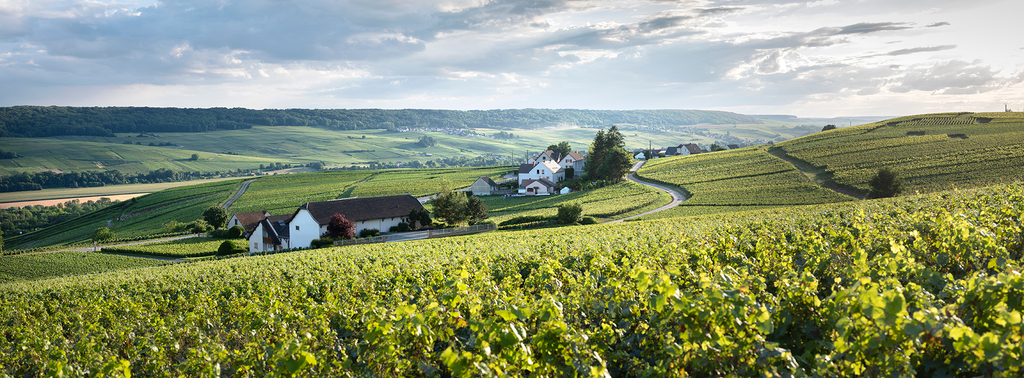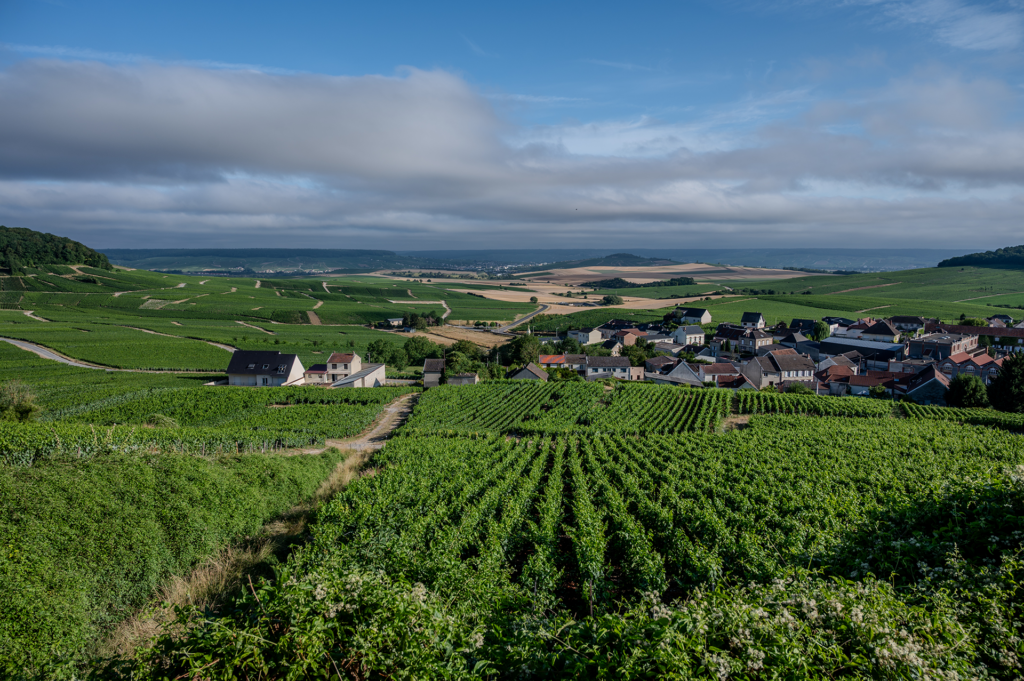
The Côte des Blancs is one of Champagne’s most emblematic terroirs. Its name already hints at its defining characteristic: here, Chardonnay reigns supreme across the vineyards. This winegrowing area stretches south of Épernay. It encompasses several villages renowned for producing precise, elegant champagnes, often distinguished by remarkable freshness. But why does Chardonnay express itself so beautifully in the Côte des Blancs? The answer lies primarily beneath the winegrowers’ feet.
A terroir particularly well suited to Chardonnay
The Côte des Blancs is distinguished by its hillsides and chalky subsoil. This chalk plays an essential role in the development of the vines. Highly porous, it can store water and then release it gradually. The vines therefore benefit from a regular supply of water, even when rainfall decreases.
Chalk also promotes effective drainage. The roots can penetrate deep into the ground in search of water and the elements necessary for their development. These conditions are particularly well suited to Chardonnay. This grape variety thrives in terroirs where chalk lies close to the surface and freshness can be preserved.
What does Chardonnay bring to the glass?
Chardonnay accounts for approximately one third of the Champagne vineyards. In the Côte des Blancs, however, it becomes the dominant grape variety. Its profile generally brings considerable freshness to champagnes. Delicate aromas of flowers and citrus fruits are often present, sometimes accompanied by more mineral sensations.
Over time, these wines can develop greater complexity. Some then reveal riper notes, reminiscent of brioche or lightly toasted bread. However, not all Chardonnays from the Côte des Blancs are alike. The exposure of individual plots, soil management and the winegrower’s choices all strongly influence the final result. It is precisely this diversity that makes tasting so interesting. Another example of Champagne’s diversity is the Côte des Bar, a terroir renowned for its Pinot Noir.
What is a Blanc de Blancs?
In the Côte des Blancs, you will frequently encounter the expression Blanc de Blancs. It refers to a champagne made exclusively from white grapes. In Champagne, this very often means Chardonnay.
A Blanc de Blancs can offer a taut, fresh and elegant profile. However, its character always depends on the terroir and the style sought by the producer. Some winegrowers favour a very linear, mineral expression. Others seek greater roundness or maturity. Simply reading “Blanc de Blancs” on a bottle is therefore not enough to know what it will taste like.
Villages that have become emblematic
The Côte des Blancs brings together several major villages of the Champagne vineyards. Avize, Cramant, Le Mesnil-sur-Oger and Oger are among the best-known names. Yet each area has its own nuances. Two champagnes made from the same grape variety can display very different profiles depending on their origin.
Comparing these expressions provides a better understanding of the concept of terroir. The grape variety provides the foundation. However, the soil, exposure, vintage and the producer’s work subsequently shape the wine’s identity. This diversity can also be found in the Vallée de la Marne and its Pinot Meunier terroir, where different growing conditions give rise to distinctive champagnes.
Discovering the Côte des Blancs without leaving Reims
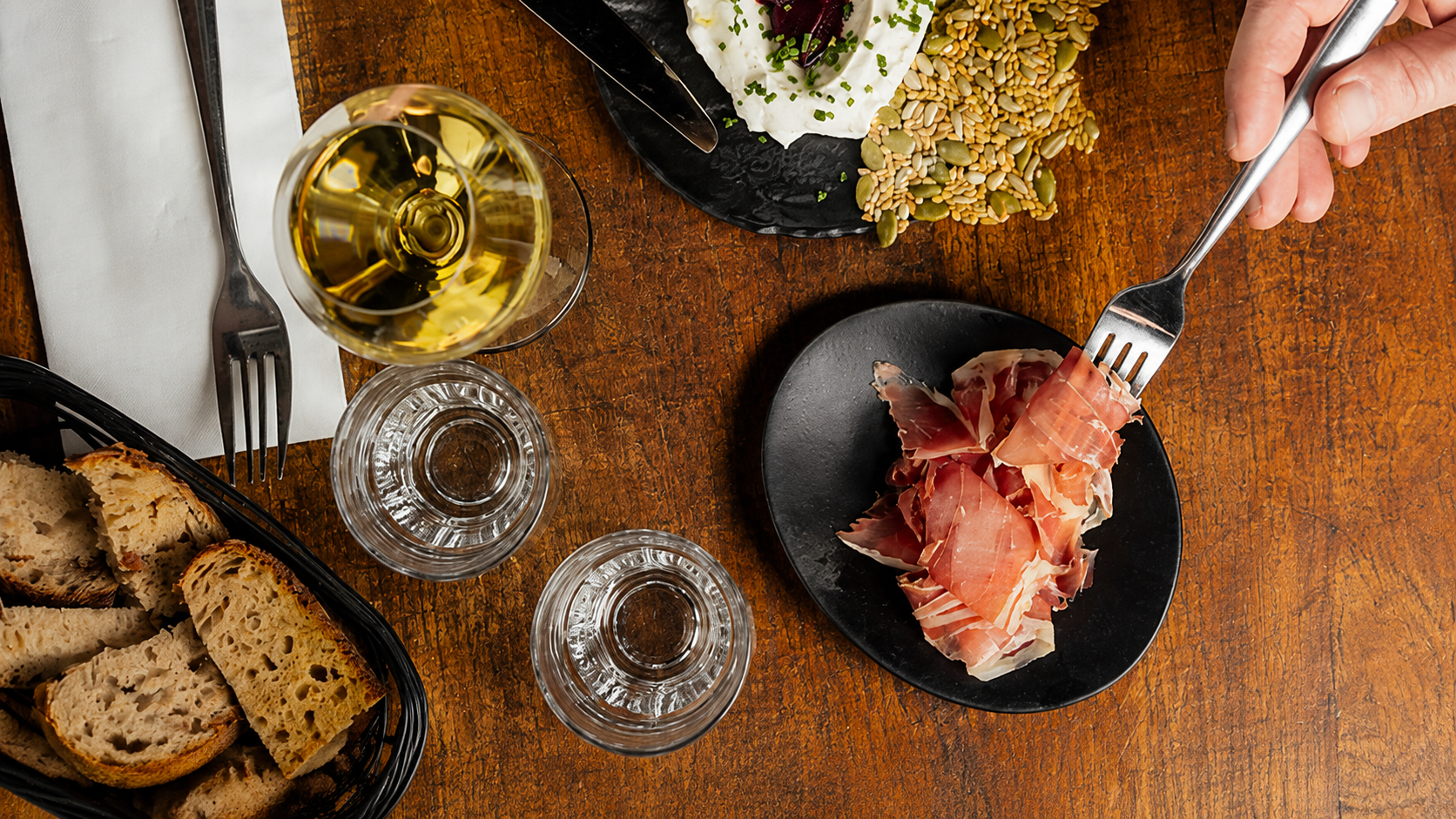
It is not essential to travel throughout the vineyards straight away to understand these differences. Tasting already provides an excellent introduction. In our champagne bar in Reims, you can compare several cuvées and discuss grape varieties, producers and terroirs.
At Le Coq Rouge, our selection specifically favours champagnes of character and passionate producers. The aim is not simply to serve a bottle, but also to tell the story of what it expresses. Tasting several Chardonnays then reveals one essential truth: the Côte des Blancs is not simply the kingdom of a grape variety. Above all, it is a collection of terroirs capable of giving Chardonnay many different expressions.